How hypnotherapy may help
What a considered process actually looks like.
People often arrive with a picture of hypnotherapy formed by television and film, and are surprised by how ordinary the reality is. Most of it is conversation. The description below sets out six steps in the order they usually occur — though how much time each takes, and whether all of them apply, will depend entirely on the individual.

The process
Six steps, adapted to the person.
-
01
Initial conversation
A first conversation is about orientation rather than treatment. It is a chance to describe what has brought you here in your own words, and to hear how the approach works before committing to anything.
Typically it covers:
- Your personal goals — what you would like to be different, in practical terms.
- Your expectations, including any that may need adjusting.
- The concerns you are currently experiencing.
- Relevant context, to whatever depth you are comfortable with.
- Your questions about the process, its limits and its cost in time.
There is no requirement to describe a difficult event in detail at this stage, or at any later stage. Saying “I would rather not go into that” is a complete answer.
-
02
Understanding individual circumstances
Individual experiences and needs vary significantly, and what is appropriate for one person may be unsuitable for another with an outwardly similar concern. This step is about building a fair picture: your health, any professional support already in place, what has been tried before, what helped, what did not, and what is happening in your life at present.
It also covers practical matters that affect what is realistic — time, responsibilities, travel, and how much capacity you currently have. An approach that ignores those tends not to survive contact with an ordinary week.
-
03
Considering suitability
This is the point at which a straightforward question is asked: is hypnotherapy an appropriate thing to be considering here at all?
Stated plainlyHypnotherapy may not be suitable for every person or every concern. Depending on the circumstances, other forms of professional support may be more appropriate — and where that appears to be the case, it will be said directly rather than left unmentioned.
Suitability is not a judgement about a person. It is a question about fit between an approach and a situation, and it can change over time. A concern that is better addressed elsewhere today may be a reasonable thing to revisit later.
-
04
Guided focus
Where sessions do go ahead, this is the part most people are curious about. Methods vary between practitioners and between individuals, and what is used is discussed beforehand rather than sprung on you. Elements may include:
- Focused attention — settling attention on something specific rather than letting it range widely.
- Relaxation — allowing the body's stress response to quieten, which for some people is itself the useful part.
- Guided imagery — working with imagined scenes chosen with you, at a level of intensity you set.
- Therapeutic suggestion — suggestions framed around goals you have agreed, which you remain free to decline.
People describe the experience very differently. Some find it deeply relaxing; others find it unremarkable and remain fully aware of the room throughout. Both are ordinary. You can speak, move, ask a question or end the session at any point.
-
05
Reflection
Time is given afterwards to talk about what the experience was like — what was noticeable, what was comfortable, what was not, and whether anything felt worth returning to. This is also where expectations are recalibrated if they need to be.
Reflection is not a test. There is no correct thing to have felt, and reporting that nothing much happened is genuinely useful information rather than a disappointing result.
-
06
Next steps
What follows is decided together, and the options are open. They may include:
- Time to reflect before deciding anything further.
- Continued sessions, where that appears appropriate and useful.
- Other forms of support, pursued alongside or instead.
- Discussion with relevant qualified professionals, including your doctor.
- Stopping — which is a legitimate outcome and does not require a reason.
No specific result is promised at this or any other stage. What can be offered is a considered process, an honest account of what it can and cannot address, and the freedom to change direction.
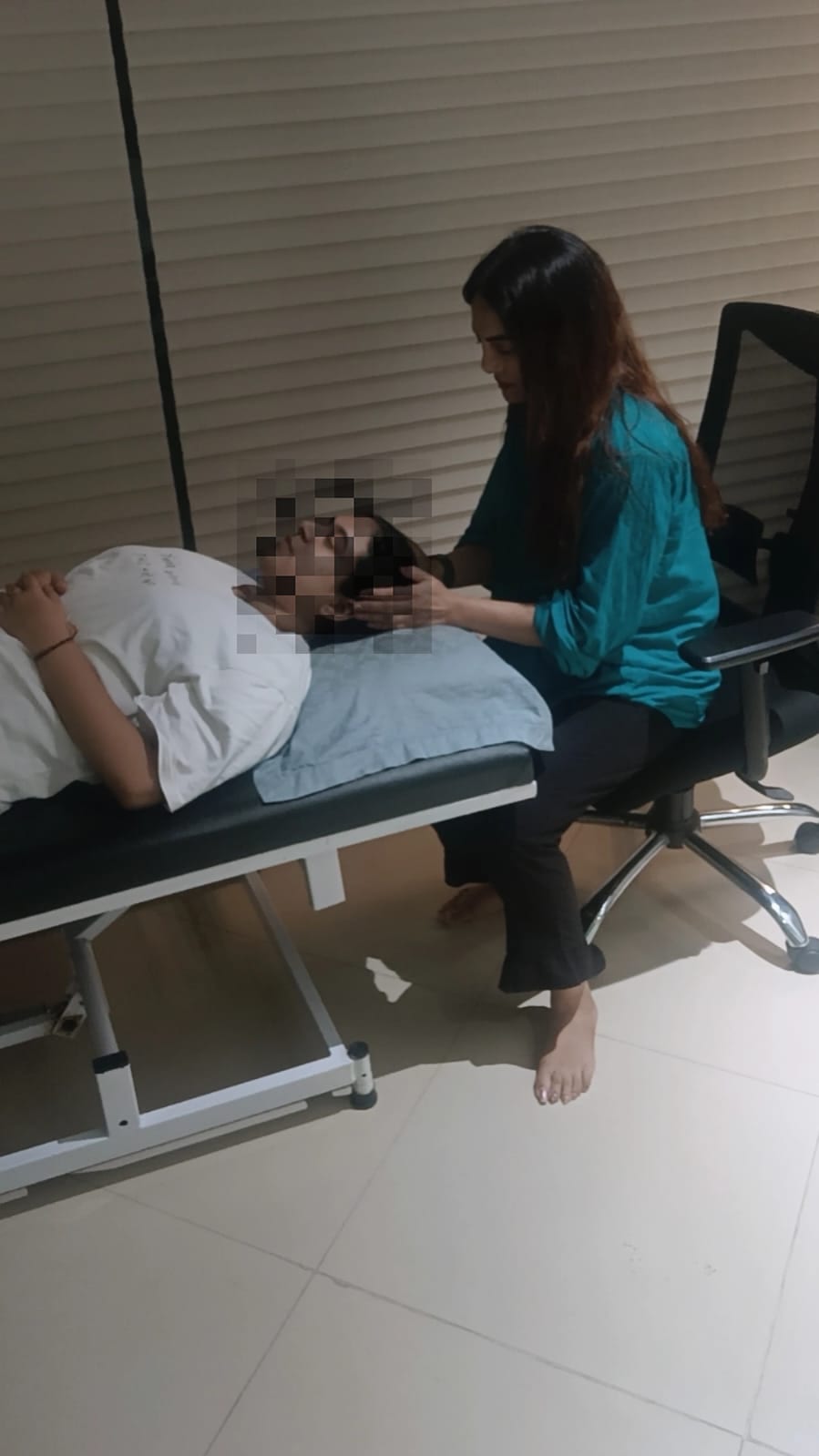
Setting expectations
What a session is not.
Popular portrayals of hypnosis have very little to do with therapeutic practice, and clearing those away early tends to make the real thing easier to consider.
- It is not sleep. People remain aware, and most remember the session afterwards.
- It is not a loss of control. You cannot be made to do or say something you do not wish to.
- It is not an interrogation. You decide what is discussed, and detail is never required.
- It is not memory retrieval. No attempt is made to recover forgotten events, and accurate recovery of memory through hypnosis should not be claimed.
- It is not a substitute for medical care. It does not replace assessment, diagnosis, medication or psychological treatment.
- It is not a fixed programme. There is no set number of sessions that everybody completes.
A realistic view of time
How long does this take?
It is the most common question, and the honest answer is that it cannot be known in advance. The number of sessions a person finds useful varies with what they are working on, their circumstances, and how they respond — none of which can be assessed from a website.
Any practitioner who names a fixed number before meeting you is describing a package rather than a considered response to your situation. What is reasonable to expect is that the question is revisited openly as things progress, including the possibility that continuing is not the right call.
It is also worth saying that progress is rarely linear. Periods of noticeable change are often followed by periods where little seems to shift, and that pattern is ordinary rather than a sign of failure.

Responses to therapy differ. Some individuals find hypnotherapy a useful part of a broader approach; others do not, and for some it will not be the appropriate choice at all. Nothing on this page should be read as a prediction of how you will respond.
Related pages
Begin with a conversation
The first step is only a conversation.
Nothing is arranged, and nothing is committed to, until you have had your questions answered and suitability has been considered properly.